







Designing for the gaps
modern fitness apps keep ignoring.
Motivated people are quitting fitness apps, not because they lost interest, but because the apps stopped being useful.
The standard offering is familiar: repeated exercise routines, meal plans, step counters, following some rigid templates, with no stress management solutions.
The motivation & design problem.
To understand why existing fitness apps fail to retain motivated users.
We conducted a solo qualitative interviews with users aged 18-35 years in Nigeria, working professionals and students currently using or who had abandoned a fitness app.
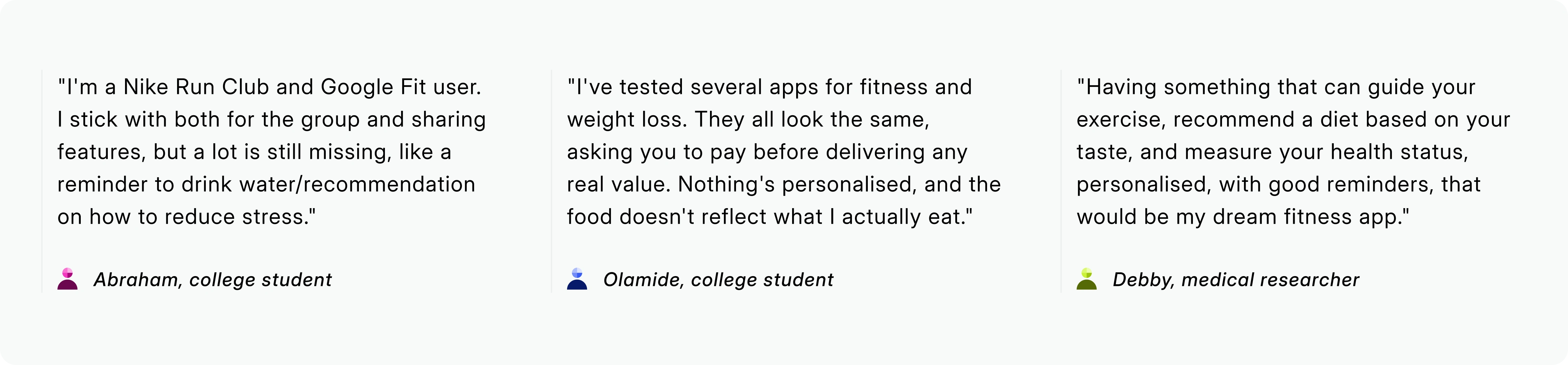
3 things stood out across every interview:
Reminders matter than expected
Hydration reminders came up unsolicited in almost every conversation. No existing app had addressed it well.
Personalisation is the baseline
Generic recommendations felt like the app didn't know them and it mattered across everything: exercise, nutrition, and stress.
Post workout stress management
Not one app they used had stress management feature. Users also want to add their own foods and receive recommendations.

Comparative Market Analysis
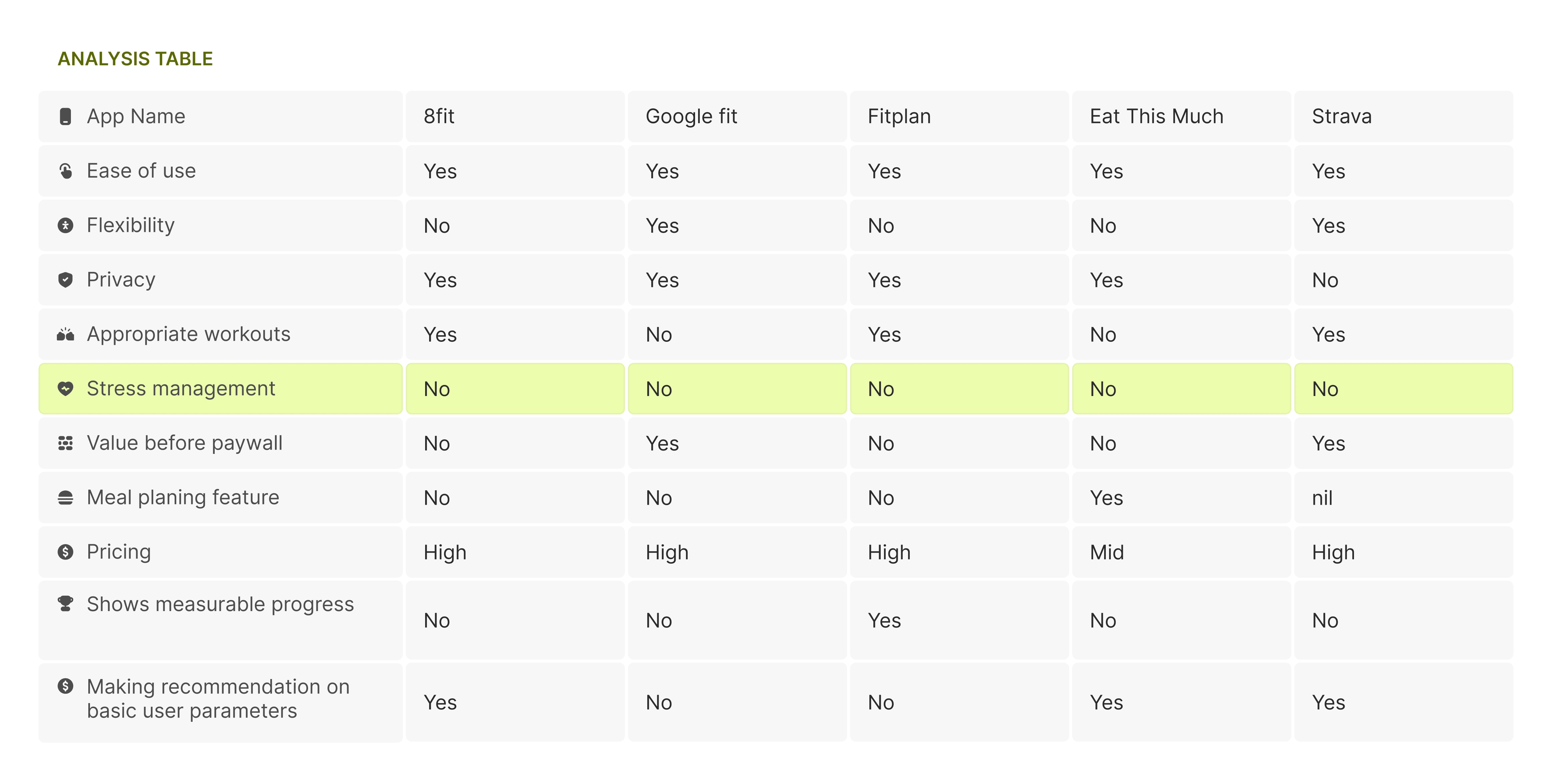
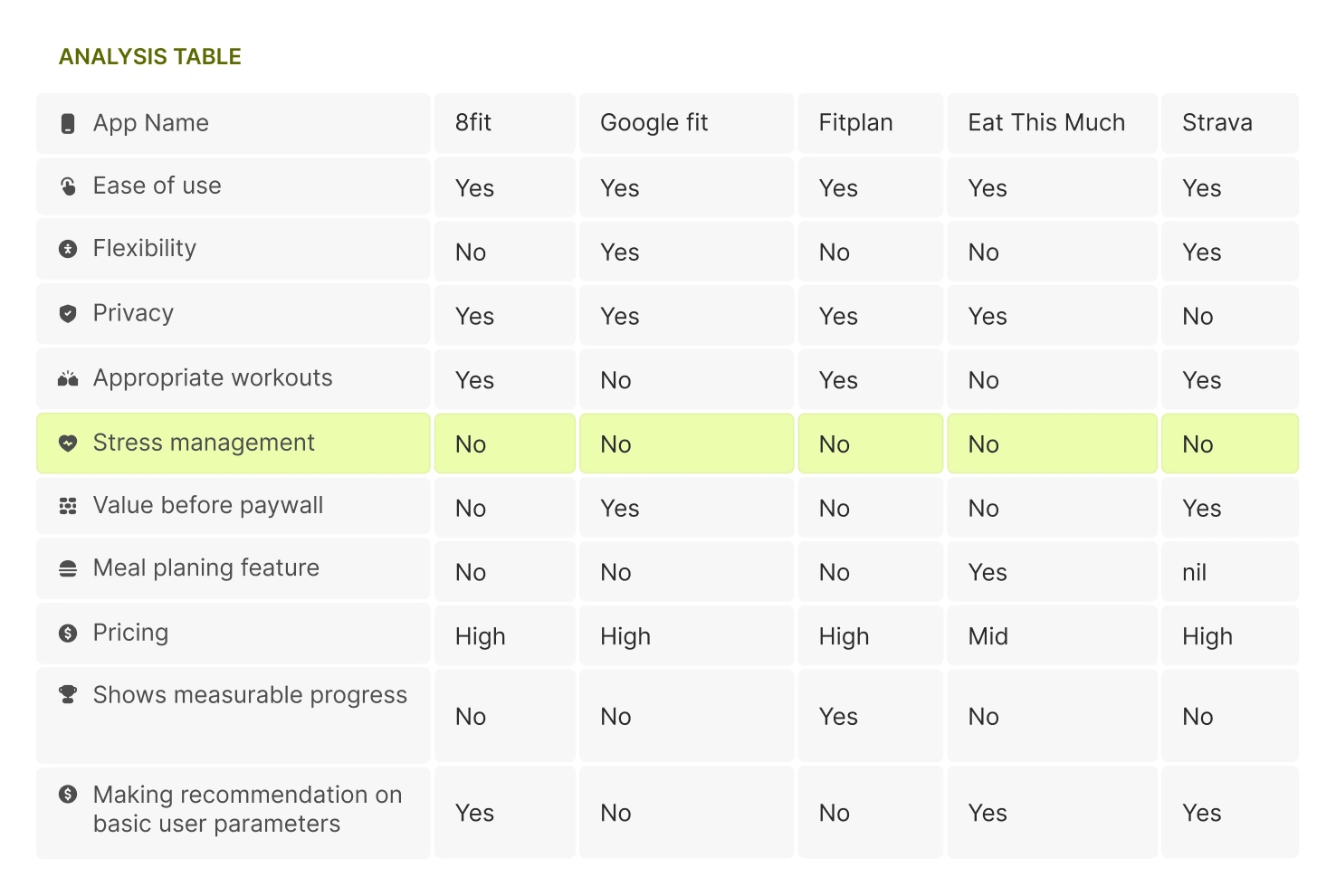
I analysed 8Fit, Google Fit, Fitplan, Eat This Much, and Strava across six dimensions. No app performed well across all six.
Stress management became the clearest opportunity, from user interview and competitive analysis none of the apps addressed it.

How can we build something that earns
trust before it asks for anything?

MET
A integrated personalised fitness, adaptive nutrition, and real-time stress management into a single daily experience.
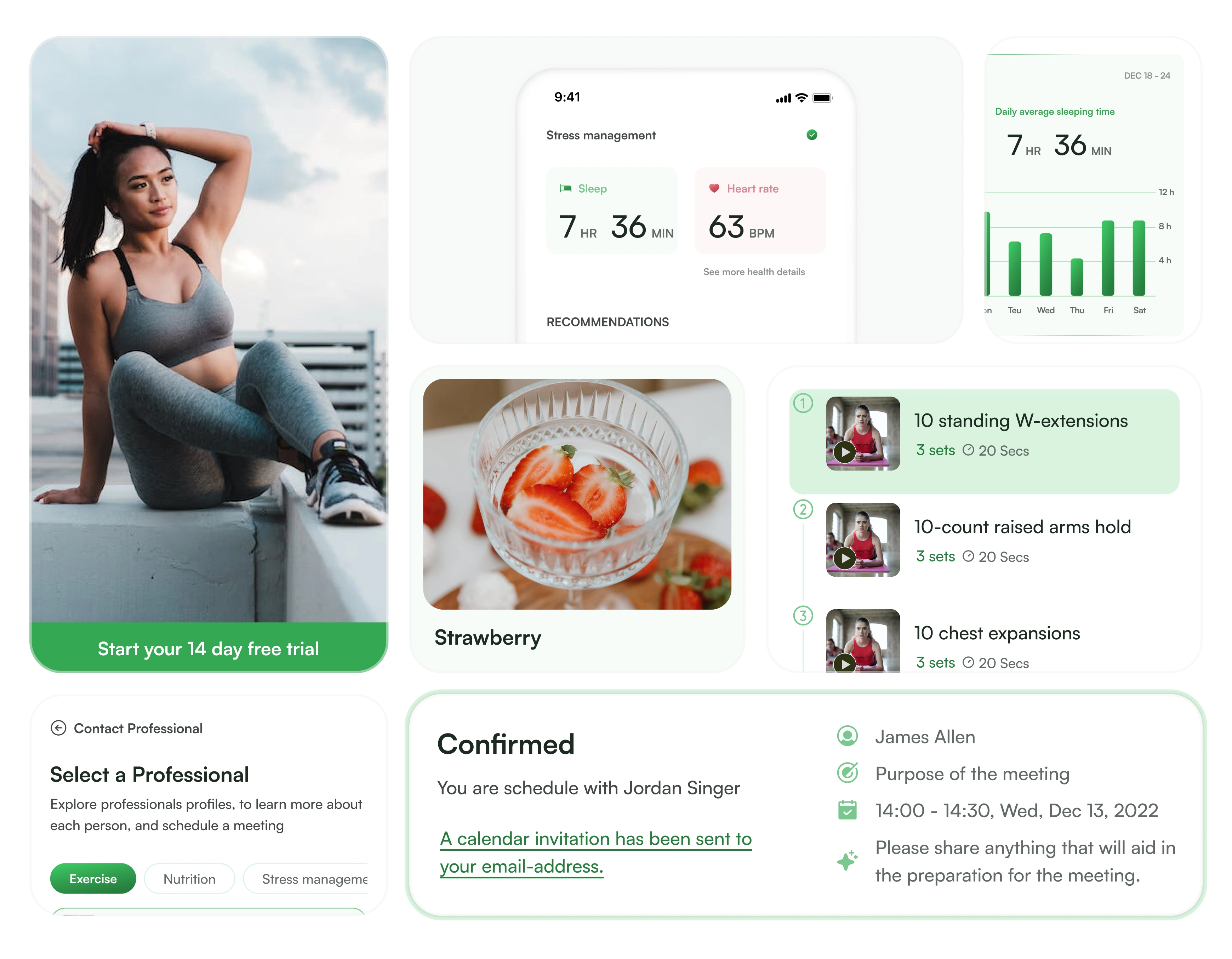
Personalised Workouts
During onboarding we ask about their goals and current routine.
Then a Dynamic difficulty levels progression kick in at 65–70% monthly, based on their workout completion rate and goals, changing the routines and giving users a reason to return.
Stress Tracking
Real-time data from Kubios and wearables fed into MET's recommendation engine. On high-stress days, the app suggested lower-intensity movement or adjusted meal timing, rather than holding users to a plan that no longer fit their state. A feature no competitor touched.
Culturally Flexible Diets
Users built their food profile from a database reflecting what they actually eat. Weekly previews allowed planning ahead for shopping and cooking and personalisation.
Access to Professionals
Booking a nutritionist, sport physician, or psychologist can feel like a big ask inside a fitness app.
We addressed that by giving users curated options to browse and book directly, as a natural next step anytime they want.
Reminders
While user are setting up their workout and nutrition schedule, they can also set a daily water reminder.
We are also building algorithms to make the recommendations at random throughout the day.

The Brand
The visual direction and design system was simple, healthy, and intentional, I designed it to give a clean and accessible feeling.

Takeaways
Research surfaces what assumptions miss the water reminder insight came from listening, not thinking.
Integration is a structural design problem combining three pillars required deliberate decisions about what lived on the same screen and what stayed invisible until needed.
Designing for stress changes the product's contract the app's job shifts from just tracking to responding. That required thinking about states, integrations and not just design.
This was my first full mobile app design, and one of the most enjoyable projects I've worked on.

Reflection
Not everyone has a wearable. The stress experience for users relying on self-reported check-ins rather than physiological data needs its own design path and remains the most under explored part of this project.
 Work
Work